

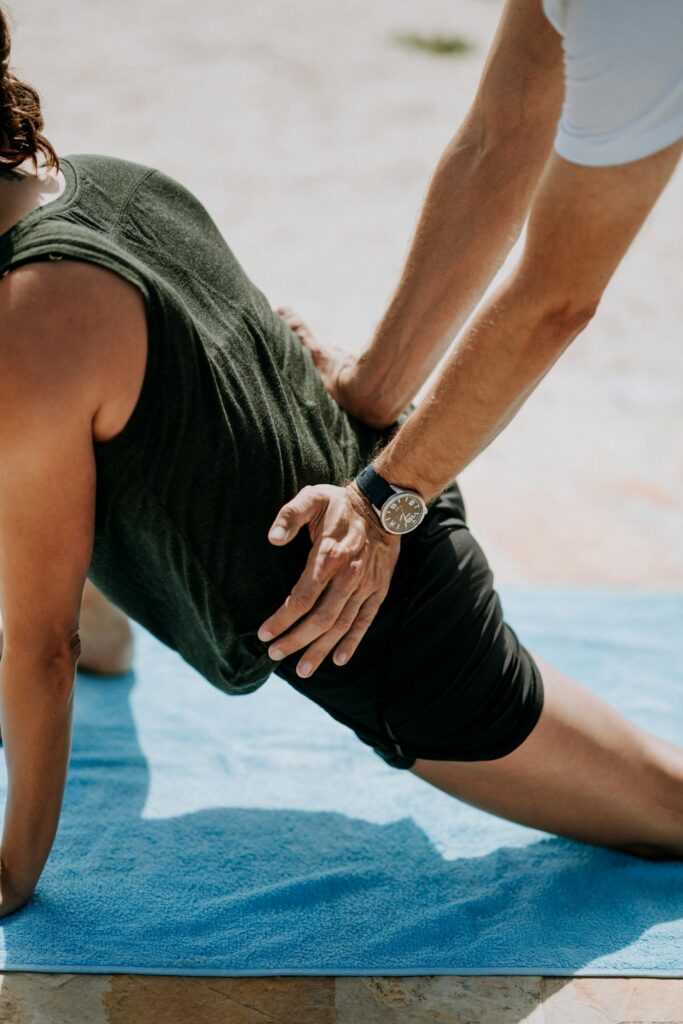
Sports massage is often associated with faster recovery, better flexibility, and improved athletic performance. The evidence is more specific: massage may temporarily improve range of motion and reduce the feeling of delayed-onset muscle soreness, but it does not reliably increase strength, speed, endurance, or power on its own.
For residents who run, cycle, swim, play recreational sports, train at home, or follow structured strength programs, sports massage is best understood as one recovery and mobility tool—not a substitute for training, sleep, nutrition, hydration, or injury evaluation.
Can sports massage directly improve athletic performance?
Usually, no. Research has not consistently shown that sports massage produces immediate improvements in sprint speed, jumping ability, muscular strength, endurance, or overall fatigue.
That does not mean massage has no value. Its effects may support performance indirectly by helping an athlete:
- Move more comfortably
- Temporarily improve flexibility or joint range of motion
- Feel less sore after demanding exercise
- Reduce the sense of muscular tightness
- Relax before or after an event
- Notice areas of unusual tenderness or restricted movement
The distinction matters. Feeling looser before activity can make movement more comfortable, but comfort is not the same as greater physical capacity. A massage session cannot replace progressive training or correct a lack of conditioning.
How does massage affect flexibility and range of motion?
Massage can create a short-term increase in flexibility or range of motion, particularly when muscles feel stiff. This effect may result from changes in pain sensitivity, nervous-system response, and tolerance to stretching rather than a permanent lengthening of muscle tissue.
For example, a runner with tight calves may temporarily find ankle movement easier after treatment. A swimmer may notice less restriction around the shoulders. Someone performing squats may feel more comfortable moving through the hips or ankles.
The benefit is most useful when improved mobility supports a specific movement. Greater flexibility is not automatically better for every athlete. Some activities require a large range of motion, while others depend on stiffness, stability, and force transfer. Excessive stretching or aggressive treatment immediately before explosive exercise may leave a person feeling relaxed but less prepared to produce force.
Does sports massage reduce soreness after exercise?
It may modestly reduce the perception of delayed-onset muscle soreness, commonly called DOMS. DOMS often appears several hours after unfamiliar or intense exercise and tends to peak within the following couple of days.
Massage may make sore muscles feel less uncomfortable and may help an athlete move more normally while recovering. However, reduced soreness does not necessarily mean the tissue has fully recovered. A person can feel better while still having reduced strength, coordination, or tolerance for another hard workout.
This is especially relevant after returning to exercise, increasing running distance, adding hill work, or beginning a new strength routine. Feeling less sore should not be used as permission to repeat a demanding session before the body is ready.
Is massage useful before competition or training?
Pre-event massage can be helpful when it is brief, familiar, and appropriately light. Some athletes use it to reduce nervous tension, focus attention, or improve the feeling of movement before activity.
A pre-event session should not be treated like deep tissue work. Heavy pressure, prolonged treatment, or aggressive stretching shortly before a race or game may produce tenderness, temporary fatigue, or a sense of heaviness.
A practical approach is to test any pre-exercise routine during ordinary training first. Do not introduce an unfamiliar technique for the first time immediately before an important event. The warm-up should still include movement-specific preparation, such as gradual jogging, dynamic mobility, practice swings, or sport-specific drills.
What is the best timing for a sports massage?
Timing depends on the purpose and the person’s response.
Before activity: A short, gentle session may help with perceived stiffness or relaxation. It should leave the person feeling alert and capable, not tender or sleepy.
After activity: Light-to-moderate work may feel soothing and may reduce the perception of soreness. It should not be used to forcefully manipulate painful tissue.
Between hard sessions: Massage may be useful when the main goal is comfort and mobility, particularly during periods of frequent training.
During recovery from an injury: The approach must be more cautious. A massage therapist may help address surrounding muscle tension, but massage does not diagnose fractures, tendon tears, significant sprains, blood clots, or other medical conditions.
The right dose is the least intense amount that provides a useful response. More pressure is not automatically more effective.
Can massage prevent sports injuries?
Massage should not be presented as a dependable way to prevent injury. It may help an athlete recognize tightness, maintain comfortable movement, or manage soreness, but injury risk is influenced by many factors.

Important contributors include sudden changes in training volume, inadequate recovery, poor technique, weakness, limited coordination, unsuitable footwear, previous injury, and exercising in extreme heat.
In Fernandina Beach, FL, outdoor training may involve warm temperatures, high humidity, wet surfaces, and seasonal changes in activity. Heat and humidity can increase perceived exertion and fluid loss, while slick surfaces may alter footing. Massage cannot compensate for dehydration, overheating, poor pacing, or unsafe training conditions.
A well-rounded injury-reduction strategy includes gradual progression, strength training, adequate sleep, hydration, rest days, and attention to pain that changes movement.
Is deep tissue massage better for athletes?
Not necessarily. “Deep tissue” describes an approach or pressure level, not a guarantee of superior results. Firm treatment may be appropriate for some areas and people, but excessive pressure can leave bruising, soreness, or irritation.
A useful session should match the athlete’s current condition, training schedule, injury history, and goals. A person who has a competition the next morning may need a very different approach from someone taking a rest week.
Pain during massage is also not proof that the treatment is working. Strong discomfort may cause protective muscle tension and can make recovery more difficult.
When should massage be avoided or delayed?
Massage should be postponed over areas with unexplained swelling, significant bruising, open wounds, skin infection, severe tenderness, or suspected acute injury. Extra caution is appropriate for people with conditions affecting blood clotting, circulation, sensation, or bone strength.
Urgent medical assessment is more appropriate when pain follows a major impact, a joint looks deformed, weight-bearing is difficult, swelling is rapidly increasing, numbness or weakness appears, or symptoms include chest pain or unusual shortness of breath.
Persistent pain that changes technique or prevents normal activity also deserves evaluation rather than repeated massage alone.
How should athletes judge whether massage is helping?
Track practical outcomes rather than expecting dramatic performance gains. Useful questions include:
- Is movement easier during the next workout?
- Does soreness interfere less with normal activity?
- Does the effect last beyond the treatment session?
- Is training quality improving over several weeks?
- Are symptoms becoming more localized, intense, or limiting?
If massage consistently leaves an athlete more sore, masks pain that returns during training, or encourages repeated overuse, it may not be serving the intended purpose.
Sports massage is most realistic as a comfort, mobility, and recovery-support method. Athletic performance still depends primarily on well-planned training, recovery habits, sound movement, and appropriate medical care when symptoms exceed ordinary post-exercise soreness.